Live debate
The Bodily Assumption of Mary
Robert Sungenis vs. James White
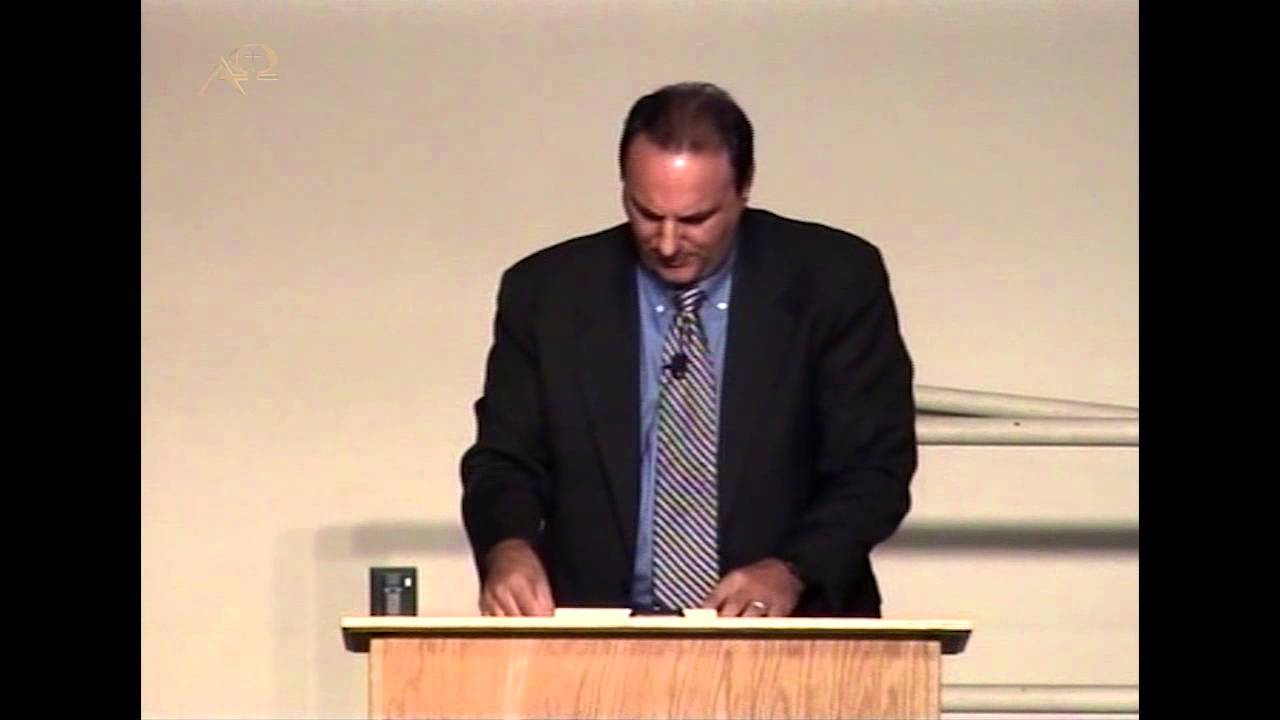
What was argued
White argued that the assumption has no basis in Scripture and no apostolic or early patristic witness, that its earliest source is the Transitus literature condemned by Pope Gelasius, and that binding it on the faithful in 1950 shows Rome placing her own authority above both Scripture and tradition. Sungenis argued that Scripture never requires every doctrine to be stated explicitly, that the Old Testament passages are allusions rather than proofs, and that Acts 15 shows the recognized leader of the church settling a controversy without explicit Scripture or tradition, an authority the Holy Spirit still gives the Church. Both men agreed that Scripture contains no direct statement of the assumption and that the doctrine of the Trinity, though not named in Scripture, is drawn from its pages.
How it ran
- 0:54Host states the resolution
- 3:43Sungenis opening statement
- 23:30White's opening statement
- 43:37Sungenis rebuttal
- 54:32White's rebuttal
- 1:04:19Sungenis second rebuttal
- 1:08:55White's second rebuttal
- 1:14:22Sungenis cross-examines White
- 1:30:35White cross-examines Sungenis
- 1:42:54Sungenis closing statement
- 1:52:45White's closing statement
The key exchanges
James White's point first, then Robert's answer. The time jumps to that moment in the video.
- 46:48
1. Isaiah 60:13 and the temple
White argues that the papal definition leans on readings like Anthony of Padua's use of Isaiah 60:13, a verse about the temple in Jerusalem that has nothing to do with Mary.
Robert answered that he never offered that verse as proof: passages such as Isaiah 60 and the Ark of the Covenant are allusions that may or may not tell us something, and they are not where the Church gets its proof.
“So I would never use Isaiah 60:13 as proof of the assumption.”
- 48:03
2. The condemned Transitus literature
White argues that the first witness to the bodily assumption is the apocryphal Transitus of Pseudo-Melito, which Pope Gelasius condemned and which Catholic scholars call worthless as history.
Robert answered that the Transitus was rejected because it carried many doctrinal errors on many subjects, that the definition never quotes it, and that the Church taking up the assumption again a century or two later shows the doctrine itself was not thrown out.
“But that doesn't mean that they threw out the assumption of Mary.”
- 49:03
3. Epiphanius did not know
White argues that Epiphanius at the end of the fourth century said Scripture is silent on Mary's end and no one knows whether she died, which shows no apostolic tradition existed.
Robert answered that Epiphanius saying he did not know means the question was still open and being discussed, not that he denied the assumption, and that the Holy Spirit who guides the Church knows the answer.
“It means somebody was talking about it in the fourth century.”
- 53:32
4. Athanasius and the Fathers
White argues that Athanasius, Cyril of Jerusalem, Gregory of Nyssa and Augustine made Scripture the rule of doctrine and never said a word about the bodily assumption.
Robert answered that none of them ever denied the assumption, and that Athanasius and Augustine held baptismal regeneration, confession to a priest, the Eucharist and allegiance to popes and councils, doctrines White rejects.
“Athanasius is not Dr. White's friend.”
- 1:07:53
5. Who decided at Jerusalem
White argues that Peter was an apostle and Pius XII is not, and that James, not Peter, presided over the council of Acts 15 and gave its judgment.
Robert answered that he never used the word pope, only the recognized leader of the church, and that even granting James gave the decision, James also decided for the whole church without Scripture or tradition.
“I said that Peter was the recognized leader of the church.”
- 1:08:55
6. Same warrant as the resurrection
White asks whether Sungenis agrees with Gerry Matatics that Catholics have the same warrant for the bodily assumption as for the resurrection of Jesus Christ.
Robert answered yes, because the same Holy Spirit stands behind both, and he said White would have to prove the Spirit does not guide the Church, when Calvin himself said the Spirit guided the Church to know the canon.
“Because we have the same authority, the Holy Spirit.”
- 1:29:43
7. Amos 9 and circumcision
White argues that James grounded the council's decision in Amos 9, a prophecy that Gentiles called by God's name would seek the Lord, which is plain Scripture and not a mere allusion.
Robert answered that neither Amos, Jeremiah 31 nor Hebrews 8 says circumcision would cease, so the apostles made that decision without scriptural precedent, and White cannot fault indirect texts for the assumption while allowing them to James.
“There is no passage in the Old Testament that declares circumcision will not be practiced.”
- 1:33:34
8. Revealed but unrecorded
White asks how a truth revealed in the first century could leave no record for hundreds of years, and whether the decision of Pius XII is simply a new revelation.
Robert answered that the Church, guided by the Holy Spirit, decides from logic, reason and Scripture's precedent when Scripture and tradition are not explicit, and that we have bits and pieces of the belief even without an unbroken written chain.
“But see, what you're expecting us to hold to is that every doctrine that's believed by us has to have this explicit chain of documentation throughout all the ages.”
- 1:50:26
9. The Trinity parallel
White argues that the Trinity pulses on every page of Scripture while no one reading the New Testament for centuries ever dreamed of the assumption, so the comparison fails.
Robert answered that the Trinity must still be extracted and assembled from many threads, and that the councils confirmed by popes did that work, handing White the doctrine he now defends.
“The Trinity is just dripping from Scripture.”
Robert's case in 5 points
- 1
Christ's love for His mother moved Him to take her body and soul into heaven, and Scripture gives precedent in Enoch and Elijah, who were also taken up.
4:53 - 2
The assumption serves Mary's mission from God: because her body is in heaven she can return to earth to warn people, as at Fatima in 1917 with prophecies that came true.
6:05 - 3
Direct scriptural proof is not to be had, only allusions, but Peter in Acts 1:20 built the replacement of Judas on Psalms that say nothing about Judas or apostleship.
11:24 - 4
Scripture has no verse requiring every doctrine to be stated explicitly, as the Trinity and many moral questions must be drawn out by reasoning.
16:13 - 5
At the council of Acts 15 the recognized leader of the church settled circumcision without Scripture or tradition, and the Holy Spirit's promised guidance lets the same leader define the assumption today.
18:20
Closing
Robert closed by calling Acts 15 the center of the question: the Old Testament never said circumcision would cease, yet Peter and James decided it, just as councils confirmed by popes settled the questions about Christ that White now relies on. He asked why that same authority should be begrudged for what he called a rather innocuous doctrine, and denied that the assumption adds to the gospel.
1:42:54
Go deeper: Bodily Assumption of Mary (the recording)
This debate with James White as an MP3, from the CAI store.
Get the recording