Live debate
Is Purgatory Biblical?
Robert Sungenis vs. James White
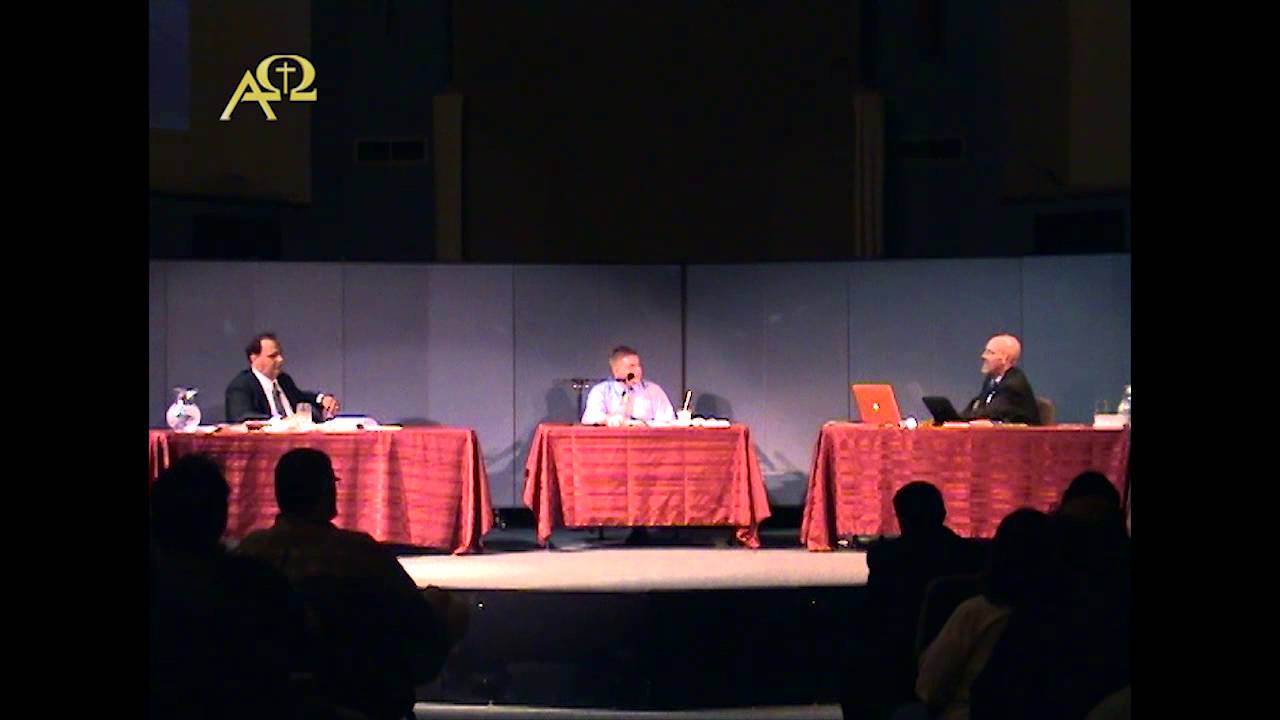
What was argued
White argued that purgatory has no apostolic root but grew from the speculations of Origen, Clement of Alexandria and the visions in Gregory the Great's Dialogues until Florence defined it; that Mark 3 shows Matthew 12:32 describes an eternal sin, not forgiveness after death; that 1 Corinthians 3 is the end-time revelation of Christian leaders' works, not a purging of souls; and that temporal punishments deny that Christ by one offering has perfected those He saves. Sungenis argued that nothing impure enters heaven, that Scripture shows God removing the guilt of sin while still punishing it (David after Bathsheba and after the census), that Matthew 12:32 implies some sins are forgiven in the age to come, and that 1 Corinthians 3 describes a man who is saved yet only through fire, in a letter full of sins Paul says will be judged. Both men agreed that prayers for the dead were an early Christian practice, and Sungenis stressed that both sides believe in heaven, hell, death and judgment.
How it ran
- 1:08Host states the resolution
- 5:51Sungenis opening statement
- 29:51White's opening statement
- 56:03Sungenis rebuttal
- 1:06:06White's rebuttal
- 1:16:58Sungenis cross-examines White
- 1:36:44White cross-examines Sungenis
- 1:57:52Sungenis second rebuttal
- 2:08:22White's second rebuttal
- 2:19:25Sungenis final cross-examination
- 2:34:30White's final cross-examination
- 2:40:54Sungenis closing statement
- 2:50:59White's closing statement
The key exchanges
James White's point first, then Robert's answer. The time jumps to that moment in the video.
- 23:25
1. Bad works or sins
White holds, in his book and in the debate, that the judgment of 1 Corinthians 3 concerns the works and rewards of Christian workers, not sin.
Robert answered that no passage of Scripture separates bad works from sin, and that the chapters around the passage are full of jealousy, strife, boasting and divisions, which Paul treats as sins. If building with wood, hay and straw were not sin, God would have no reason to destroy the man in verse 17.
“Where does the Bible distinguish between bad works and sin?”
- 26:37
2. Saved, yet so as through fire
White argues that the text does not say the man is purified by fire: he is saved like someone who escapes a burning house having lost everything.
Robert answered that the Greek adverb in verse 15 means likewise or in this manner, comparing the man with his works: as the works went through the fire, so does he.
“So, he does go through the fire.”
- 58:38
3. Matthew 12 and Mark 3
White argues that the parallel in Mark 3 calls blasphemy against the Spirit an eternal sin, so Matthew 12:32 opens no door to forgiveness in the age to come, and reading it otherwise makes Mark wrong.
Robert answered that both evangelists say the sin is never forgiven, but Matthew's wording adds a piece of information that fits purgatory, since it would be superfluous to say a sin will not be forgiven here or there unless some sins are forgiven there. He conceded it is not a strong text.
“Now I'm not saying this is a strong verse for purgatory.”
- 1:01:02
4. One context or two
White argues that verses 10 to 15 speak of workers who build on the foundation, while verses 16 and 17 shift, with a new paragraph and a plural pronoun, to those who tear down the temple.
Robert answered that Paul's thought runs straight on from building to the temple and back to boasting in verse 21, and that the any man of verse 17 can refer to any of the people above. He suggested White's theology of the elect, not the text, requires two groups.
“So there's no demarcation of context here.”
- 1:04:55
5. Suffer loss or be punished
White argues that the verb in verse 15 is rendered suffer loss by nearly every translation, that Paul uses it that way in Philippians 3:8, and that it stands as the direct opposite of receiving a reward in verse 14.
Robert answered that suffer loss is the right translation for the building metaphor, but that the word also carries the sense of punishment, which the Bauer lexicon lists with 1 Corinthians 3:15 as its example. What the man loses for a time is heaven itself.
“A lot of translations translate to suffer loss and they are very correct in doing so.”
- 1:16:58
6. Discipline or legal punishment
White argues that David's sufferings were a Father's discipline of His son, which is a different category from the legal punishments purgatory says must be paid off.
Robert answered by asking whether a father who disciplines his children does not also punish them, and then pressed White to show where Scripture calls Christ's atonement a legal punishment at all.
“When you discipline your children, do you not also punish them?”
- 1:55:03
7. Early prayers for the dead
White argues, citing historians, that early prayers for the dead asked for refreshment and peace for the departed, not deliverance from a place of pain.
Robert answered that early believers held incomplete forms of many doctrines, as with the Trinity before the fourth century, and that fathers from Tertullian and Cyril of Jerusalem to Chrysostom and Augustine spoke of prayers for the dead and purgatory together.
“Well, you have all kinds of elementary incomplete ideas among the populace in the early centuries of the Church on many issues.”
- 2:03:41
8. How many judgments
White argues that the judgment seat of 2 Corinthians 5:10 is a judgment of believers about their service, distinct from the judgment of life and death, and that purgatory itself needs a judgment at death.
Robert answered that Scripture knows only one final judgment, in which good and bad deeds are judged, and that White had tied 1 Corinthians 3 to 2 Corinthians 5:10 in his own book. If White sees another judgment, he should show it from Scripture.
“I don't know of any other judgment that Scripture talks about other than the final judgment.”
- 2:35:41
9. Able to save to the uttermost
White argues that Hebrews 7:25 and 10:14 say Christ saves completely and has perfected those He sanctifies, which leaves no room for suffering to atone for temporal punishment.
Robert answered that the soul in purgatory is already saved, because the guilt of sin was atoned for, so it will not suffer eternal judgment. What remains is the punishment for sin, which God applies in this life or the next, as He did with David.
“The person who goes to purgatory is already saved.”
Robert's case in 5 points
- 1
Revelation 21:27 says nothing impure will enter the kingdom, and God makes a person pure within rather than covering an impure one with a garment.
6:58 - 2
Scripture shows God taking away the guilt of sin while its temporal punishment remains: David was forgiven for adultery, murder and the census, yet lost his son and saw 70,000 die.
12:20 - 3
Jesus' words in Matthew 12:32 about no forgiveness in this world or the next imply that some sins are dealt with after death, which is why Christians prayed for the dead.
14:28 - 4
Fathers including Tertullian, Cyril of Jerusalem, Ambrose, Chrysostom and Augustine taught purgatory and prayers for the dead, and a Church that condemned heresy never condemned them but defined them at Lyons, Florence and Trent.
15:45 - 5
1 Corinthians 3 describes three outcomes: a reward in heaven (verse 14), destruction (verse 17), and between them a man whose work burns up but who is saved, yet so as through fire (verse 15).
20:49
Closing
Robert closed by saying he and White love each other and share belief in heaven, hell, death and judgment, and that the context of 1 Corinthians 3, along with Paul's warnings in 2 Corinthians 13 and Hebrews 10:26, is about Christians falling into sin that will be judged. He argued that every judgment text in the New Testament describes the one final judgment, and that the judgment seat is used in Scripture of a judge finding someone innocent or guilty, not of a seat of mercy for Christians only.
2:44:19
Go deeper: Is Purgatory Scriptural? (the recording)
This debate with James White as MP3s, from the CAI store.
Get the recording