Canon of Scripture: Questions & Answers
Explore 9 questions and answers about Canon of Scripture, answered by Dr. Robert Sungenis.
Ask where the table of contents came from. That is the whole question, and it is the one the Protestant position cannot answer on its own terms. If Scripture alone is the rule of faith, then the list of which books are Scripture has to come from Scripture. It does not. No book of the Bible contains an index of the Bible. Somebody decided, and whoever decided was exercising exactly the kind of authority that sola scriptura says nobody has.
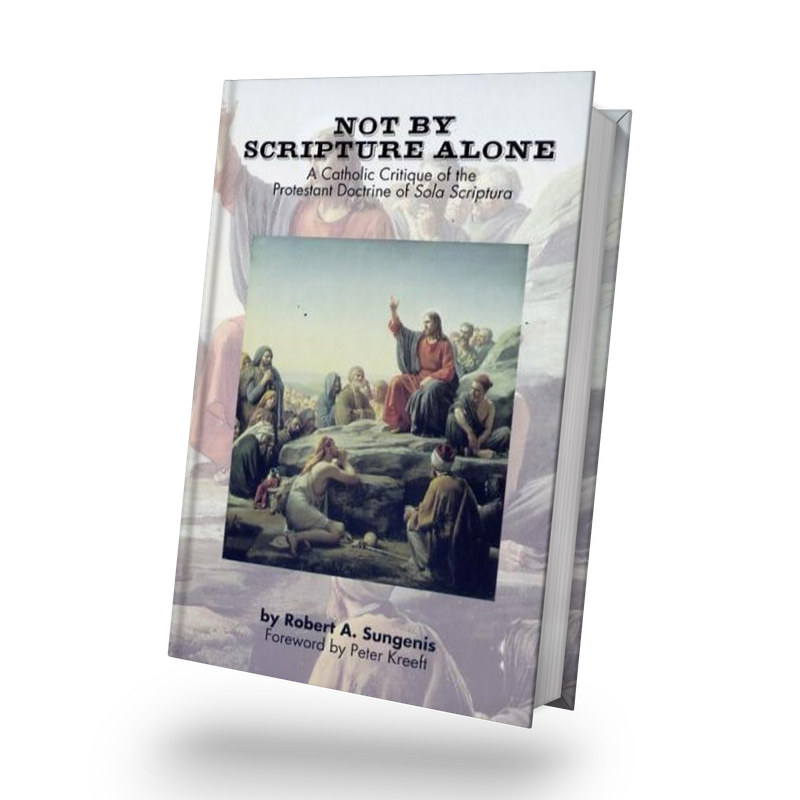
Patrick Madrid calls this canon fodder in the opening chapter of Not By Scripture Alone, and he is right to be blunt about it. The Reformers inherited a canon. They did not derive it. They then removed seven books from the Old Testament and kept the New Testament exactly as the Catholic Church had handed it to them, which is a strange thing to do if the Church that handed it over had no authority to settle the question in the first place.
The Fathers are not on the other side of this either, and that is the part people find hardest to believe until they read the sources. Joseph Gallegos works through them chapter by century in that volume: the Apostolic Fathers, the second and third centuries, Athanasius and the rule of faith, Augustine against Maximinus. What you find is not a Bible standing alone. You find Scripture read inside a Church, with tradition, the creeds, the liturgy and the succession of bishops all doing work that the Fathers plainly thought was necessary. Athanasius defended Nicaea by the Catholic rule of faith, not by proof-texting.
I edited that book rather than writing all of it, and I did so deliberately. Peter Kreeft wrote the foreword. Philip Blosser took the philosophical problems, Fr. Mitchell Pacwa the exegesis of Matthew 15 and Mark 7, and there is a formal debate between Madrid and Douglas Jones printed in full so a reader can watch the argument happen instead of taking my word for how it goes. A case this old deserves more than one man asserting it.
The questions below deal with the canon itself: which books, on whose authority, and why the seven the Reformers dropped were there in the first place.
Books on this subject
- Who decided which books belong in the Bible, and why does the Catholic Bible have more books?
- Was the Jewish canon closed before Christ, and where does the canon of Scripture come from?
- Were the Book of Enoch and other books quoted in Scripture inspired?
- Why is 3 Maccabees not in the canon while Ezra is?
- Why did the Jews reject the deuterocanonical books, and when was the Tanakh's canon set?
- If the Epistle to the Laodiceans were found, could the Church add it to the canon, or is that closed?
- Why don't Jesus and the apostles quote the apocryphal books, and does Esther's absence from the Dead Sea Scrolls matter?
- Did the Church determine the canon of the Bible, or discover it through evidence?
- Are Daniel chapters 13 and 14 (Susanna, and Bel and the Dragon) really part of inspired Scripture?