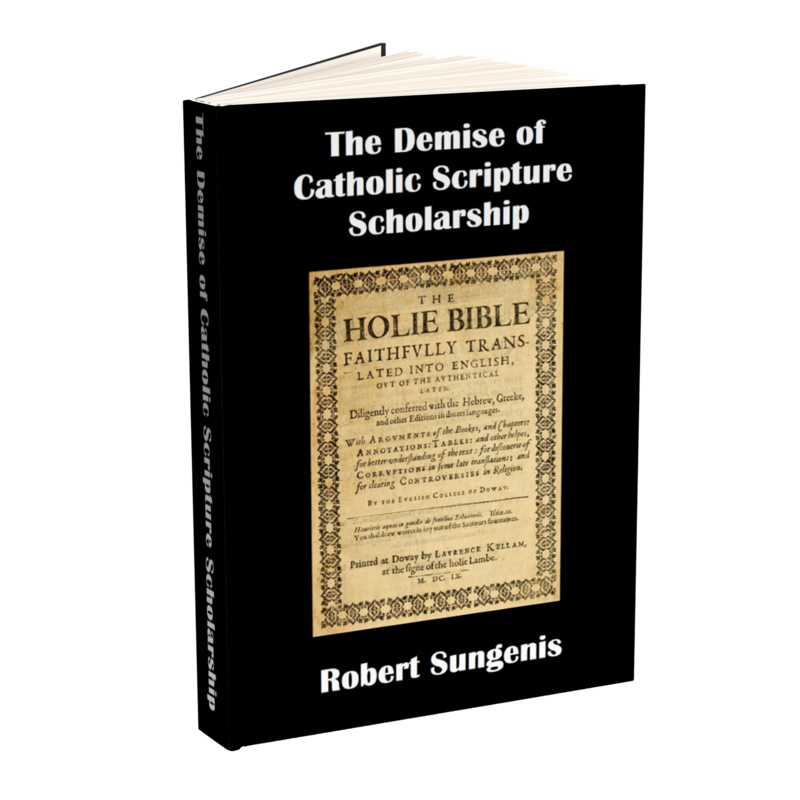
The Demise of Catholic Scripture Scholarship
$15.00
In stock
How did Catholic biblical scholarship reach the point where the Resurrection, the Virgin Birth, and the very offices of pope and priest are openly questioned in its highest ranks? This book traces that decline. The turning point came under Pius XII, whose encyclical Divino Afflante Spiritu judged it beneficial for Catholic scholars to use the tools of what is called historical criticism, the method that applies scientific analysis to a written document: its authenticity, its date, its authorship, its sources, its genre, and the cultural pressures on its writer.
Historical criticism is not evil in itself; used rightly it is a real asset to the study of literature. But good tools in agenda-driven hands do damage. Catholic liberals, who had been dissenting since the late 1800s, seized on Divino Afflante Spiritu and, over time, turned Scripture scholarship into something Pius XII would scarcely have recognized, until hardly anything the Bible says is now taken at face value, and what little remains is confined to a shrunken notion of "matters of salvation" drawn from a distorted reading of Vatican II's Dei Verbum 11. Much of the book centers on the work and influence of Fr. Raymond Brown, and on the correctives offered by his critics.
Contents
- Introduction: Historical Criticism (p. 1)
- Chapter 1: Fr. Raymond Brown, SS (p. 5)
- Chapter 2: The Origins of Historical Criticism (p. 11)
- Chapter 3: The Quest for the Historical Jesus (p. 17)
- Chapter 4: Critics of Historical Criticism (p. 25)
- Chapter 5: Limitations of Historical Criticism (p. 28)
- Chapter 6: Vatican II and Biblical Inerrancy (p. 31)
- Chapter 7: Fr. Brown and the 1964 Pontifical Biblical Commission (p. 54)
- Chapter 8: Cardinal Joseph Ratzinger and Biblical Interpretation (p. 63)
- Chapter 9: Other Works by Fr. Raymond Brown (p. 70)
- Chapter 10: More Critics of Fr. Raymond Brown (p. 89)