Catholic Answers, Answered

Robert Sungenis replies to Karl Keating, Jimmy Akin and Trent Horn, in his own words and theirs.

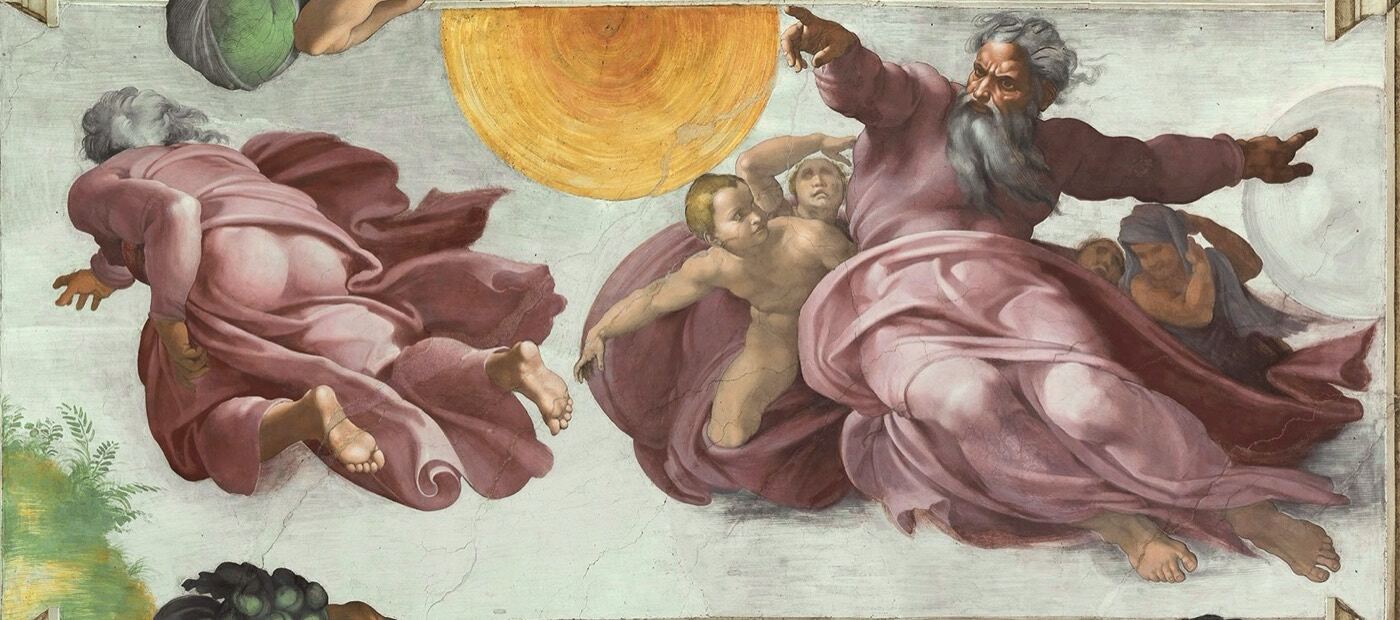
Michelangelo's fresco of God, airborne in a rose robe, pointing to the newly made Sun
Michelangelo, The Creation of the Sun, Moon and Plants, Sistine Chapel, 1508 to 1512. Public domain.

Who is who

Only what Robert's own writing and videos say about them.

Catholic Answers

The apostolate Karl Keating founded

  • Robert calls it “normally a good source for Catholic apologetics,” formerly run by Karl Keating and now by Christopher Check. Supersessionism is Irrevocable (2024)
  • Its magazine, This Rock, carried the Keating and Akin articles Robert answered in 2003. Robert’s 2003 replies

Karl Keating

Founder and former president

  • Founder and president of Catholic Answers when Robert answered him in 2003; retired by 2023. 2003 Genesis reply; “Two Guys” video (2023)
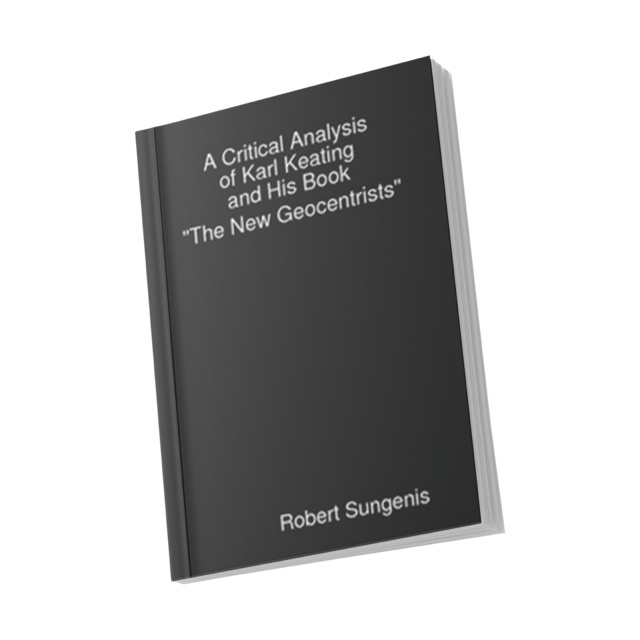
  • Author of Catholicism and Fundamentalism and of The New Geocentrists, 355 pages, which Robert answers point by point. A Critical Analysis (2015)
  • He once had Robert on his radio program and endorsed Robert’s Not By Faith Alone. A Critical Analysis (2015)

Jimmy Akin

Senior apologist

  • Described in 2003 as “senior apologist for Catholic Answers in California.” Robert’s 2003 reply to Akin
  • Author of Justification by Faith and Works? Robert says he has known him for over 30 years. Robert Sungenis Live, July 9, 2025

Trent Horn

Staff apologist

  • A “second generation employee” of Catholic Answers, and author of Why We’re Catholic (Catholic Answers Press, 2017). Robert’s Horn videos
“There’s a certain logic to Catholicism that you have to get, and he’s got it. Trent Horn has got it.”
Robert, Robert Sungenis Live #167, April 26, 2023

Two more names recur. Keating quotes David Palm in his book, and Robert says the two of them relied on the same physicist, Alec MacAndrew, whose figures on the cosmic microwave background Robert answers below.

The dispute at a glance

Karl Keating and The New Geocentrists

Keating's book runs to 355 pages. Robert's 2015 reply counts 111 errors in it and answers them topic by topic. The 31 points below are the core of that reply: the Galileo affair, Scripture and the Fathers, and the science. His earlier replies to Keating in This Rock, from 2003, follow.

Galileo and the Church

Did the Earth-centred models fail the observations?

Keatingas Robert reports it

Keating dedicates his book to his old history of science teacher, Curtis Wilson. On Catholic Answers radio (February 13, 2015) he said that class showed him how, as observations grew more precise, first the Ptolemaic and then the Tychonic model stopped fitting what astronomers saw.

“And we were able to see over the course of the class that as time went on and observations became ever more precise, that the Ptolemaic theory and later the Tychonian theory did not accommodate the appearances.”
Keating on Catholic Answers radio, February 13, 2015, as Robert quotes him

Robert's answer

Robert grants that Ptolemy’s model fell short. Tycho’s did not: once its orbits were made elliptical, as Riccioli did in 1665, it matches Kepler’s model orbit for orbit. The figure below draws both pictures from the same motions.

“If Prof. Wilson was only dealing with kinematics and not dynamics, then it would be true to say that Ptolemy’s model can be shown to be inadequate, but Tycho Brahe’s model matches both the Copernican and the Keplerian models, orbit for orbit, equation for equation.”
A Critical Analysis of Karl Keating and His Book “The New Geocentrists” (2015)
“In 1665, Giovanni Riccioli, in his book, Astronomia Reformata, added elliptical orbits to Tycho’s model for this very reason, and afterward he remained a devoted geocentrist.”
A Critical Analysis of Karl Keating and His Book “The New Geocentrists” (2015)

Did the Church welcome Copernicus?

Keatingas Robert reports it

Keating points out that a cardinal, Nicolaus Schoenberg, praised Copernicus, and that Copernicus was never brought before the Inquisition, though he too said how Scripture should be read.

“Copernicus….even had his work praised by a cardinal, Nicolaus Schoenberg of Capua.”
The New Geocentrists, p. 33, as Robert quotes it
“Copernicus himself did the same [as Galileo] and was not brought up on charges before the Inquisition”
The New Geocentrists, p. 36, as Robert quotes it

Robert's answer

Schoenberg stood alone among the cardinals. The book went on the Index and stayed there until 1835, and Copernicus died the year it came out.

“Keating leaves out the fact that Schoenberg was the only cardinal to give favor to Copernicus.”
A Critical Analysis of Karl Keating and His Book “The New Geocentrists” (2015)
“After this, both Rheticus’ and Copernicus’ books were put on the Index of Forbidden Books in the 1560s and not taken off until 1835 due to the malfeasance of Cardinal Olivieri.”
A Critical Analysis of Karl Keating and His Book “The New Geocentrists” (2015)
“Copernicus died the year his book was published (1543), so obviously he couldn’t be ‘brought up on charges before the Inquisition.’”
A Critical Analysis of Karl Keating and His Book “The New Geocentrists” (2015)

Infallible, or merely binding?

Keatingas Robert reports it

Keating says Catholic geocentrists treat the Fathers’ agreement on geocentrism as “tantamount to an infallible teaching,” and that no theologian or historian counts the 1633 ruling, approved in forma communi by Urban VIII, as an act of papal infallibility.

“the Catholic proponents in particular argue that early Christian writers unanimously endorsed geocentrism and that this was tantamount to an infallible teaching on the subject.”
The New Geocentrists, p. 33, as Robert quotes it
“the ruling issued by the Holy Office and approved in forma communi by Urban VIII in 1633 is not considered by theologians or Church historians to have been an exercise of papal infallibility.”
The New Geocentrists, p. 42, as Robert quotes it

Robert's answer

Robert denies ever using the phrase and says the question of infallibility belongs to the Church, not to him. He also points out that a papal decree does not have to be infallible to bind Catholics.

“We never used the phrase ‘tantamount to an infallible teaching.’”
A Critical Analysis of Karl Keating and His Book “The New Geocentrists” (2015)
“Whether geocentrism is an infallible teaching is for the Church to decide. We only bring the information to the Church from science, scripture and history, for that is the job we are called to do.”
A Critical Analysis of Karl Keating and His Book “The New Geocentrists” (2015)
“First, according to Vatican II’s Lumen Gentium 12 and 25, a decree from a pope doesn’t have to be ‘infallible’ in order to be authoritative and demand obedience from Catholic parishioners. Second, ‘theologians and historians’ do not officially decide what is or is not ‘infallible.’”
A Critical Analysis of Karl Keating and His Book “The New Geocentrists” (2015)

Quoted by Robert

“So far as we can conclude from the circumstances of the condemnation, Pope Urban VIII and the cardinals of the Holy Office certainly did not themselves think it to be reformable.”
Fr. George Coyne, The Church and Galileo, p. 354, as Robert quotes him

Discipline, or doctrine?

Keatingas Robert reports it

Keating holds that the Galileo decision, and Urban VIII’s approval of it, were acts of discipline rather than definitions of doctrine, and that disciplinary decisions can be changed or reversed.

“The decision of the authorities in the Galileo case, and Urban VIII’s subsequent approbation of the decision, were exercises not in defining doctrine but in discipline.”
The New Geocentrists, p. 296, as Robert quotes it
“Disciplinary decisions can be modified or even reversed.”
The New Geocentrists, p. 297, as Robert quotes it

Robert's answer

Robert’s answer turns on the verdict. Galileo was convicted at a canonical trial of being “vehemently suspect of heresy,” and a heresy has to be established before anyone can be suspected of it. And even if the decrees were disciplinary, they have never been changed.

“Let’s ask a probing question: how could the Galileo condemnations be mere ‘disciplinary’ matters when, in fact, Galileo was convicted at a canonical trial of being ‘vehemently suspect of heresy’?”
A Critical Analysis of Karl Keating and His Book “The New Geocentrists” (2015)
“To be convicted of being suspect of heresy means that a heresy had to have been adjudicated and established before Galileo could have been convicted of it. Heresies are not determined by mere ‘disciplinary’ procedures.”
A Critical Analysis of Karl Keating and His Book “The New Geocentrists” (2015)
“Second, even if they were disciplinary, the fact remains that they have never been ‘modified or reversed.’”
A Critical Analysis of Karl Keating and His Book “The New Geocentrists” (2015)

Quoted by Robert

“which, however, is a most grievous error, as an opinion can in no wise be probable which has been declared and defined to be contrary to divine Scripture.”
The 1633 sentence against Galileo, as Robert quotes it

The 1914 Catholic Encyclopedia

Keatingas Robert reports it

Keating cites the Catholic Encyclopedia article on Galileo, which says the Church authorities committed a “grave and deplorable error” and sanctioned a false principle about the use of Scripture.

“which says that it ‘is undeniable that the ecclesiastical authorities committed a grave and deplorable error’ when they condemned Copernicanism and that they ‘sanctioned an altogether false principle as to the proper use of Scripture.’”
The New Geocentrists, p. 296, as Robert quotes it

Robert's answer

The article is one author’s opinion, John Gerard’s, with no magisterial standing. And asking whether the 1616 and 1633 decrees were “ex cathedra” reads back a doctrine defined two and a half centuries later.

“Gerard’s argumentation is subjective since the doctrine of papal infallibility would not be defined until 250 years after Paul V and Urban VIII made their judgment of heresy against Galileo, so any argument of whether the judgments were ‘ex cathedra’ or ‘infallible’ is unavoidably anachronistic.”
A Critical Analysis of Karl Keating and His Book “The New Geocentrists” (2015)
“As for ‘formal decree,’ evidently Pope Urban VIII and his Holy Office did have in hand such a formal decree since they would not have been able to judge Galileo as ‘vehemently suspect of heresy’ if they had no formal decree of heresy with which to convict him.”
A Critical Analysis of Karl Keating and His Book “The New Geocentrists” (2015)

The Settele imprimatur of 1820

Keatingas Robert reports it

Keating tells how Canon Giuseppe Settele’s astronomy textbook, which argued heliocentrism was proven, was refused a license by the chief censor, and how Settele appealed to Pius VII and got it.

“Giuseppe Settele’s Elements of Astronomy argued that heliocentrism had been proven. The Church’s chief censor refused to license the book, and Settele appealed directly to the pope, Pius VII”
The New Geocentrists, pp. 295-296, as Robert quotes it

Robert's answer

The reasons Cardinal Olivieri gave Pius VII for the 1616 and 1633 condemnations were never the Church’s reasons. The 17th-century Church condemned heliocentrism because it moved the Earth, and it had already put Kepler’s book on elliptical orbits on the Index.

“Olivieri told Pius VII that the real reason the 1616 and 1633 Church had condemned Galileo and heliocentrism was because: (1) Galileo had no answer to why the Earth’s atmosphere would not be sucked away if the Earth was moving around the Sun, and (2) that since Galileo didn’t include the elliptical orbits of Kepler, his heliocentric model didn’t work.”
A Critical Analysis of Karl Keating and His Book “The New Geocentrists” (2015)
“In fact, the 1616 Church had already put Kepler’s book, the Epitome, on the Index of Forbidden Books in 1619, and it remained on all subsequent Indexes up to 1835, and it was the very book that taught the elliptical orbits of the planets!”
A Critical Analysis of Karl Keating and His Book “The New Geocentrists” (2015)

Galileo, the 1616 injunction and the Dialogo

Keatingas Robert reports it

Keating relies on Todd Charles Wood, who says Robert made it sound as if Galileo defied the Church straight away, and that Robert claimed the infallible Magisterium condemned Galileo, so the condemnation could never be rescinded.

“it was the infallible Magisterium of the Church that condemned Galileo and therefore the condemnation could not be rescinded without admitting that the Magisterium had made a mistake.”
The New Geocentrists, p. 79, as Robert quotes it, quoting Todd Charles Wood

Robert's answer

Robert answers both points. The 1633 sentence records Galileo confessing that he began the Dialogo after the 1616 command, and Robert has said the condemnation “has not been rescinded,” never that it could not be.

“The injunction didn’t care what Galileo’s intentions were. It simply stated that he was to stay away from the subject altogether.”
A Critical Analysis of Karl Keating and His Book “The New Geocentrists” (2015)
“I never said that it was the ‘infallible Magisterium…that condemned Galileo,’ nor did I ever say that it ‘could not be rescinded.’ I have repeatedly said that it ‘has not been rescinded,’ not that it could not be rescinded.”
A Critical Analysis of Karl Keating and His Book “The New Geocentrists” (2015)
“I specifically stated that since the condemnation wasn’t issued in a formally infallible venue, it then depended on the Ordinary Magisterium.”
A Critical Analysis of Karl Keating and His Book “The New Geocentrists” (2015)

Quoted by Robert

“to abstain completely from teaching or defending that doctrine and opinion or from discussing it; and further, if he should not acquiesce, he is to be imprisoned.”
The 1616 injunction to Galileo, as Robert quotes it

Scripture and the Fathers

Did the Fathers write about cosmology at all?

Keatingas Robert reports it

Keating says few Fathers wrote on cosmology, so no unanimous consent can be shown, and those who did wrote only in the language of appearances.

“It is not easy to demonstrate that many of the Fathers ever wrote about cosmology at all; it is not easy to show a ‘unanimous consent’ when most of the apparently had nothing to say on the topic.”
The New Geocentrists, p. 47, as Robert quotes it

Robert's answer

Robert lists more than two dozen Fathers who did write on it, notes that several defined doctrines were rarely discussed by the Fathers either, and quotes the Fathers who put the Earth at the centre in plain, technical terms.

“Most of the Fathers had nothing to say on a variety of topics, including some of our most important doctrines. But the fact remains that many Fathers wrote on cosmology and all of them were the prominent and important Fathers that the Church has come to recognize and honor.”
A Critical Analysis of Karl Keating and His Book “The New Geocentrists” (2015)
“At other times they wrote from a more technical position, stating that the Earth is in the middle or center of the universe and the sun goes around it as if on a wheel.”
A Critical Analysis of Karl Keating and His Book “The New Geocentrists” (2015)

A consensus nobody argued for?

Keatingas Robert reports it

Keating grants that the early Christian writers took a geocentric cosmos for granted, as nearly everyone did, but says it was only a backdrop: they never argued for it against heliocentrism.

“Such a view formed a backdrop to the Fathers’ writing, but no where did they argue for the scientific factuality of geocentrism over heliocentrism.”
The New Geocentrists, p. 287, as Robert quotes it

Robert's answer

No council or pope requires the Fathers to have debated a point before their agreement counts. Nobody argues for a belief nobody attacks, and that silence proves nothing against it.

“One would assume that if polemical discussion amongst the Fathers was a critical requirement in order to qualify the consensus as legitimate, and, in turn, critical in requiring our obedience to the consensus, the Church would, indeed, address that issue, but it does not. To say otherwise is simply an argument from silence.”
A Critical Analysis of Karl Keating and His Book “The New Geocentrists” (2015)
“This shows us that the Fathers understood Scripture’s statements regarding a non-moving Earth to include both a non-rotation as well as a non-translation”
A Critical Analysis of Karl Keating and His Book “The New Geocentrists” (2015)

What Providentissimus Deus says

Keatingas Robert reports it

Keating says Robert demands a literalistic reading of Scripture, which neither Leo XIII’s Providentissimus Deus nor Pius XII’s Divino Afflante Spiritu requires, and cites Leo on the Fathers sometimes reflecting the physics of their day.

“This is not what is taught in Providentissimus Deus nor in the later Divino Afflante Spiritu. Neither papal document insists that a reader must try to shoehorn a literalistic interpretation into Scripture.”
The New Geocentrists, pp. 285-286, as Robert quotes it

Robert's answer

Keating, Robert says, quotes section 19 of the encyclical and leaves out sections 14 and 15: Scripture may not be read against the unanimous agreement of the Fathers, and the literal sense is kept unless reason or necessity forbids it. Section 19 is about single Fathers’ opinions, not their consensus.

“Notice that Leo stresses the ‘unanimous agreement of the Fathers,’ and it was upon this basis that St. Robert Bellarmine told Fr. Foscarini and Galileo that they could not interpret the Bible to teach heliocentrism.”
A Critical Analysis of Karl Keating and His Book “The New Geocentrists” (2015)
“In regards to cosmology, Leo’s teaching would simply mean that we would have to have necessary proof that geocentrism was incorrect in order to depart from the ‘literal and obvious sense’ of Scripture.”
A Critical Analysis of Karl Keating and His Book “The New Geocentrists” (2015)
“According to Leo’s previous statements about the Fathers in Sections 14 and 15, we are only obligated to follow the Fathers when they are in consensus on a particular Christian doctrine. None of the above (four humours, spontaneous generation, etc.) were Christian doctrine, nor was there a consensus about them among the Fathers.”
A Critical Analysis of Karl Keating and His Book “The New Geocentrists” (2015)

The language of appearance, and Joshua’s long day

Keatingas Robert reports it

Keating says no passage of Scripture actually teaches that the Sun goes around the Earth: each one describes what is seen, the way astronomers still speak of sunrise and sunset.

“In not one of the passages does Scripture actually teach that the Sun revolves around the Earth, and not a single verse says that the Earth is at the center of the universe”
The New Geocentrists, p. 285, as Robert quotes it
“Each passage uses phenomenological language to describe what is seen.”
The New Geocentrists, p. 285, as Robert quotes it

Robert's answer

Robert agrees that “the sun sets” is a way of speaking in either system. But Joshua 10 says the Moon stopped too, and the Moon moves on its own. Had only the Earth’s turning stopped, the Moon would have kept going. The figure below shows the difference.

“All geocentrists know that phrases such as ‘the sun sets’ have a metaphorical or phenomenological dimension to them for the mere fact that the sun doesn’t actually ‘set’ in either the geocentric or heliocentric systems.”
A Critical Analysis of Karl Keating and His Book “The New Geocentrists” (2015)
“Not once did Keating deal with the fact that the Moon moves independently of the Sun and stars and thus does not allow a phenomenological reading of Joshua’s text, nor does it allow one to claim that the Sun and Moon were stopped by a cessation of a rotating Earth, since the Moon would keep moving in such a scenario.”
A Critical Analysis of Karl Keating and His Book “The New Geocentrists” (2015)
“First, I’ve never claimed that Scripture says Earth is at the center of the universe, and for good reasons. One is that Scripture doesn’t say so; second is because there are two centers in the universe: the geometric center and the mass center, and the two are distinct.”
A Critical Analysis of Karl Keating and His Book “The New Geocentrists” (2015)

Psalm 93: “the world shall never be moved”

Keatingas Robert reports it

Keating follows Danny Faulkner: Psalm 93:1 says only that no outside agent will move the Earth, so it rules out neither an orbit nor a daily turn. Through John Hartnett he adds that the same logic would make the believer of Psalm 112:6 immovable too.

“In other words, Psalm 93:1 and like passages does not exclude Earth’s orbiting the Sun or its diurnal rotation.”
The New Geocentrists, p. 161, as Robert quotes it

Robert's answer

Nothing needs excluding, since no verse ever says the Earth moves. The psalm compares the world’s stability with God’s throne, and on the Hebrew words he finds no conflict with Psalm 112.

“But why would there be a need to ‘exclude’ an orbiting or turning Earth if no biblical passage has ever included it?”
A Critical Analysis of Karl Keating and His Book “The New Geocentrists” (2015)
“Logically, if his throne does not move then the world cannot move.”
A Critical Analysis of Karl Keating and His Book “The New Geocentrists” (2015)
“Hence, there is no contradiction between Psalm 112:6 and Psalm 93:1, and there is nothing in the former that would deny understanding the latter as teaching an unmovable Earth.”
A Critical Analysis of Karl Keating and His Book “The New Geocentrists” (2015)

What the Earth is, or where it is?

Keatingas Robert reports it

Keating agrees with Robert C. Newman: Israel mattered to God’s plan without being at the geographic centre, and the Earth matters for what it is, not where it is.

“If the earth is central to God’s plan (and it is), it is because of what the Earth is, not where it is.”
The New Geocentrists, p. 87, as Robert quotes it

Robert's answer

The comparison does not hold. A sphere’s surface has no centre, but Scripture says the Earth does not move, which leaves everything else moving around it.

“Of course God didn’t tell Israel they were centered geographically, since spherical surfaces don’t have centers. But God did say that the Earth doesn’t move and thus everything else in the universe must be revolving around it, and thus the Earth is at or near the geographic center, just as the Fathers of the Church said (as noted above).”
A Critical Analysis of Karl Keating and His Book “The New Geocentrists” (2015)
“This was confirmed by the Fathers, the medievals and the two popes who condemned Galileo, and that truth has never been rescinded by any future pope or council.”
A Critical Analysis of Karl Keating and His Book “The New Geocentrists” (2015)

Was the centre the worst place to be?

Keatingas Robert reports it

In the book and on Catholic Answers Live (February 13, 2015), drawing on C. S. Lewis, Keating says geocentrists misread the ancients: in the old cosmology the centre was the lowest place, farthest from God, so moving the Earth off it was no demotion.

“So if you think of a big sphere, the center point is the worst place to be because it’s furthest from God.”
Keating on Catholic Answers Live, February 13, 2015, as Robert quotes him

Robert's answer

The centre as the universe’s low point is Aristotle’s idea, and the Church did not take it up. The Fathers who put the Earth at the centre never call it insignificant, and in a vast universe a centre is more special, not less.

“But what Mr. Keating failed to reveal was that Aristotle’s notion was rejected by the Church.”
A Critical Analysis of Karl Keating and His Book “The New Geocentrists” (2015)
“Consequently, the more vast the universe, the more special a center becomes since the center gives a definitive location and direction out of all the vastness.”
A Critical Analysis of Karl Keating and His Book “The New Geocentrists” (2015)

Quoted by Robert

“Because they are unsteady and giddy, they think that the Earth turns round with them, which yet turns not, but stands firm.”
St. John Chrysostom, as Robert quotes him

The science

Michelson-Morley: what the null result meant

Keatingas Robert reports it

Keating says the easy explanation of the 1887 Michelson-Morley result has always been that there is no aether, and he charges Robert with cutting Ronald Clark’s Einstein biography to show only one of Clark’s three alternatives.

“That solution is to realize that aether simply does not exist.”
The New Geocentrists, p. 97, as Robert quotes it
“Clark mentions ‘there alternatives,’ but Sungenis lets his reader see only one.”
The New Geocentrists, pp. 288-289, as Robert quotes it

Robert's answer

The simplest reading is that the Earth is not moving. Robert shortened Clark on purpose to show the answer that was set aside as “unthinkable.” His Galileo Was Wrong volumes give all three in full.

“In reality, the simplest explanation to the Michelson-Morley experiment is that the Earth isn’t moving in space.”
A Critical Analysis of Karl Keating and His Book “The New Geocentrists” (2015)
“Third, the reader knows why I truncated the quote, since I want to emphasize to him something that I know he has never heard in his lifetime, namely, that instead of Einstein’s Special Relativity theory, an equally plausible solution to the Michelson-Morley experiment is that the Earth is not moving in space, but that this solution was dismissed out of hand because it was ‘unthinkable’ for modern man.”
A Critical Analysis of Karl Keating and His Book “The New Geocentrists” (2015)
“First, all the Michelson-Morley type experiments showed a small positive result, but Einstein and his colleagues did their best to try to make it appear as if there were no positive results.”
A Critical Analysis of Karl Keating and His Book “The New Geocentrists” (2015)

Quoted by Robert

“only three alternatives. The first was that the earth was standing still, which meant scuttling the whole Copernican theory and was unthinkable.”
Ronald W. Clark, Einstein: The Life and Times, as Robert quotes him

No aether, no geocentrism?

Keatingas Robert reports it

Keating says aether does not exist, and that without it geocentrism collapses: nothing could turn the star field around the Earth each day or hold the Earth at the centre. He calls Gerardus Bouw’s plenum “special pleading.”

“If aether does not exist…geocentrism collapses because there is no way to explain how the star field can circle the Earth every twenty four hours, and there is no way to explain what keeps the Earth at the center of the universe.”
The New Geocentrists, p. 78, as Robert quotes it

Robert's answer

Mach and Einstein both allowed a universe turning around a fixed Earth without any aether. And experiments detect a rotation between the Earth and space but not an orbit, which is what a fixed Earth inside a turning universe would give.

“False. Both Ernst Mach and Albert Einstein allowed for the possibility of a geocentric universe in which the stars revolve around a fixed Earth, based on the fact of relative motion, but neither incorporated an aether for that purpose.”
A Critical Analysis of Karl Keating and His Book “The New Geocentrists” (2015)
“Why, you ask, would the experiments detect a rotation and not a revolution? Heliocentrists are stuck for an answer, since they need both a revolution and a rotation for their system to work. Geocentrists have the perfect answer, namely, the Earth isn’t revolving around the sun, but space is daily rotating around a fixed Earth.”
A Critical Analysis of Karl Keating and His Book “The New Geocentrists” (2015)
“However, just as passengers may get up from their seat and walk in the fuselage, so stars and planets can have independent movement in the plenum. This is why planets can revolve around their stars due to gravity and inertial forces between the star and planet.”
A Critical Analysis of Karl Keating and His Book “The New Geocentrists” (2015)

Quoted by Robert

“Recapitulating, we may say that according to the general theory of relativity, space is endowed with physical qualities; in this sense, therefore, there exists an ether.”
Albert Einstein, Leiden address, May 5, 1920, as Robert quotes him

Does relativity allow an Earth at rest?

Keatingas Robert reports it

Through Robert C. Newman, Keating says Einstein’s principle covers only frames moving in straight lines at constant speed, not the circling Sun and Earth. Elsewhere he grants that if relativity lets the Earth be the resting centre, it lets anything be, so “there is no way to know.”

“Einstein’s principle of relativity refers to frames of reference which are moving at a constant velocity in a straight line relative to one another. This is not the case with the Sun and Earth, where the relative motion is approximately circular.”
The New Geocentrists, pp. 85-86, as Robert quotes it, quoting Robert C. Newman
“Then it equally is possible to say that any other object, whether a planet or a star or a speck of intergalactic dues, is motionless at the center. There is no way to know.”
The New Geocentrists, p. 277, as Robert quotes it

Robert's answer

Newman has mixed up Einstein’s two theories. Special relativity covers straight-line motion; general relativity covers rotation and treats a turning Earth and a turning universe as equally valid. And if there is “no way to know,” he asks why Catholic Answers teaches that the Sun-centred system is the only proven one.

“But non-inertial frames are covered by the General theory (e.g., things that move in a circle instead of a straight line), and it is that theory that says, with respect to dynamics, an Earth rotating in a fixed universe is just as valid as a rotating universe around a fixed Earth.”
A Critical Analysis of Karl Keating and His Book “The New Geocentrists” (2015)
“So here we have Keating admitting one of the fundamental theses of geocentric cosmology in its battle against heliocentric cosmology, yet trying to use it against geocentrism instead of support of it.”
A Critical Analysis of Karl Keating and His Book “The New Geocentrists” (2015)

Quoted by Robert

“Thus from Einstein’s point of view, Ptolemy and Copernicus are equally right. What point of view is chosen is a matter of expediency.”
Max Born, as Robert quotes him

Parallax, aberration, Doppler and star streaming

Keatingas Robert reports it

Through Newman and Danny Faulkner, Keating offers the old evidence for the Earth’s orbit: the yearly shift of nearby stars (parallax), the aberration of starlight, a yearly cycle in the Doppler shift of starlight, and star streaming. He adds that the Sun, a modest star, could hardly drag vastly larger stars around.

“It is not clear how the Sun, which is not a large star, manages to move stars that are incredibly distant and, many of them, immensely larger than itself.”
The New Geocentrists, pp. 163-165, as Robert quotes it, on Danny Faulkner

Robert's answer

Robert answers with the neo-Tychonic model. There the star field is centred on the Sun and moves with it as the Sun circles a fixed Earth. The Sun drags nothing, and the same parallax, aberration and yearly Doppler pattern follow as in the Sun-centred picture.

“Neo-Tychonic geocentrism holds that the sun is aligned with the stars, that is, they both move in the same direction at the same time, the sun acting as the geometric center to the stars. The sun, in turn, moves around the fixed Earth. As such, the same parallax seen in the heliocentric system is seen in the geocentric.”
A Critical Analysis of Karl Keating and His Book “The New Geocentrists” (2015)
“Stellar aberration has the same cause as stellar parallax in the geocentric system. That is, both aberration and parallax are created due to the fact that the sun is the center of the star field and is going around a fixed Earth.”
A Critical Analysis of Karl Keating and His Book “The New Geocentrists” (2015)
“The optical illusion of the separation of the stars can be caused either by the Earth moving past the stars or the stars moving past a fixed Earth. Both will produce the phenomenon of star-streaming.”
A Critical Analysis of Karl Keating and His Book “The New Geocentrists” (2015)

Stars faster than light?

Keatingas Robert reports it

Keating says a universe turning around the Earth daily is indistinguishable from an Earth turning in a still universe, and choosing the turning Earth spares us bodies moving faster than light.

“This alternative understanding with the Earth rotating and the universe not, removes any need to consider what happens if a body exceeds the speed of light.”
The New Geocentrists, p. 117, as Robert quotes it

Robert's answer

The speed limit belongs to special relativity, where there are no gravitational or inertial forces. Under general relativity a turning universe produces large inertial forces, and light can go faster the farther out it is.

“Keating is apparently oblivious to the fact that the limit of the speed of light is only applicable to Special Relativity, where there are no gravitational or inertial forces.”
A Critical Analysis of Karl Keating and His Book “The New Geocentrists” (2015)
“Interestingly enough, in the geocentric universe there are tremendous inertial forces created by a rotating universe. The farther away from Earth, the greater the inertial forces are. The greater the inertial forces, the faster the speed of light can be.”
A Critical Analysis of Karl Keating and His Book “The New Geocentrists” (2015)

Quoted by Robert

“If gravitational fields are present the velocities of either material bodies or of light can assume any numerical value depending on the strength of the gravitational field.”
W. G. V. Rosser, An Introduction to the Theory of Relativity (1964), as Robert quotes him

What holds a geostationary satellite?

Keatingas Robert reports it

Keating gives a whole chapter to satellites. If the stars’ pull holds a satellite in place over a fixed Earth, he says, the stars on the far side would cancel those above, leaving only Earth’s gravity and a satellite that would have to levitate. He calls it perhaps the strongest argument against a motionless Earth.

“perhaps the strongest argument against the notion of a motionless Earth”
The New Geocentrists, p. 137, as Robert quotes it

Robert's answer

The pulls do not cancel, because the satellite is thousands of miles nearer the stars above it. And both models start the satellite the same way: about 7,000 miles an hour, then inertia. The figure below runs both side by side.

“Keating fails to realize that since the satellite is closer by at least 22,236 miles to the stars right above it than the stars on the other side of the Earth; and as such, there will be a greater gravitational pull on the satellite by the stars right above.”
A Critical Analysis of Karl Keating and His Book “The New Geocentrists” (2015)
“In both models the satellite is given an initial counter-clockwise thrust of 7000 mph, and in both models it stays at that speed due to inertia.”
A Critical Analysis of Karl Keating and His Book “The New Geocentrists” (2015)
“Since the ‘space’ in both models is precisely the same, then neither model presents any friction against the satellite, and thus inertia will move each satellite just as if it is moving a planet around the sun.”
A Critical Analysis of Karl Keating and His Book “The New Geocentrists” (2015)

The view from the Moon

Keatingas Robert reports it

Keating argues that if the Moon circled the Earth every 24 hours, astronauts on it would watch the whole star field pass behind it in a day. The backdrop stayed put, so he concludes the Earth turns.

“If the Moon circled the Earth every twenty-four hours, and if the astronauts patiently observed that motion, they would see that the Moon’s backdrop would change hour by hour. In the course of a day the whole of the star field would pass behind the Moon.”
The New Geocentrists, p. 170, as Robert quotes it

Robert's answer

The Moon does not cross the star field each day. The turning universe carries the stars, the Sun and the Moon together.

“No, the Moon moves with the star field, since the stars, the Moon, and the sun are all carried by the universe that is rotating daily around a fixed Earth.”
A Critical Analysis of Karl Keating and His Book “The New Geocentrists” (2015)
“The only independent movement that the Moon and sun have is that the sun lags behind the star field by about 1 degree per day, and the Moon lags behind the sun by a few degrees per day.”
A Critical Analysis of Karl Keating and His Book “The New Geocentrists” (2015)

The ping-pong ball at Manitoba

Keatingas Robert reports it

Keating’s chapter on Robert’s debate at the University of Manitoba describes an undergraduate, Adam Cousins, stirring a bowl of water with a ping-pong ball in it. The ball spun, and Keating says a turning aether would spin the Earth the same way.

“Sungenis believes that the Earth is kept motionless at the center of the universe because the aether rapidly rotates around it, exerting equal force from all sides.”
The New Geocentrists, p. 303, as Robert quotes it

Robert's answer

Robert notes that Keating reports the audience vote himself, and it went Robert’s way. He answers the bowl from Misner, Thorne and Wheeler’s Gravitation: around a spinning sphere the drag near the equator runs opposite to the drag near the poles, so the torques cancel. In Newton’s terms, the centre of mass feels no torque at all.

“First, although Keating implies that I was ‘stumped’ by this question, the fact is that Keating admits on page 302 that the vote as to who won the debate (taken immediately afterward from the audience) was 24 to 18 in favor of me”
A Critical Analysis of Karl Keating and His Book “The New Geocentrists” (2015)
“The center of mass does not sustain any torque, that is, there is no force that will turn the center of mass. As such, if the Earth is the center of mass for a rotating universe, it will not sustain any torque from the universe and thus there will be no force to turn the Earth.”
A Critical Analysis of Karl Keating and His Book “The New Geocentrists” (2015)

Quoted by Robert

“Consequently, the rod rotates in the direction opposite to the rotation of the sphere.”
Misner, Thorne and Wheeler, Gravitation, p. 1120, as Robert quotes it

Where are the geocentric equations?

Keatingas Robert reports it

Keating asks why no geocentrist has worked out the equations for his system. Later he quotes John Hartnett, who grants that the equations can be written in Earth-centred coordinates but says they are horribly complicated, and that the simplest equations give the clearest physics.

“This raises the question why no geocentrist has taken the time to work out the equations for his system.”
The New Geocentrists, p. 96, as Robert quotes it

Robert's answer

Robert points to the equations in Galileo Was Wrong, chapter 2, and notes that Keating’s own witness admits they exist. Simplicity, he adds, is no test of truth: Copernicus needed more epicycles than Ptolemy.

“First, since Hartnett has claimed that geocentric equations exist, and Mr. Keating is quoting Hartnett to prove a point, this means that Keating’s previous claim on page 96 that geocentrists do not have equations for their geocentric system is false.”
A Critical Analysis of Karl Keating and His Book “The New Geocentrists” (2015)
“Sometimes a simple system is the best one; sometimes a simple system is not able to account for all the variables. It is presumptuous, then, to make a rule that the simplest system is the true system.”
A Critical Analysis of Karl Keating and His Book “The New Geocentrists” (2015)
“But Copernicus found out to his dismay that planetary orbits were not simple, and he ended up having to add 48 epicycles to even come close to the 40-epicycle system of Ptolemy.”
A Critical Analysis of Karl Keating and His Book “The New Geocentrists” (2015)

Hubble’s redshifts

Keatingas Robert reports it

Keating, quoting a reviewer of the Manitoba debate, reports that when the Doppler shift of starlight came up, Robert answered with old data and references to his own book.

“Later in the debate, Cousins brought up the Doppler shift, in which light from stars varies in color depending on whether the stars are moving toward or away from us”
The New Geocentrists, p. 304, as Robert quotes it

Robert's answer

The redshifts are the point. Nearly every galaxy is redshifted as seen from Earth, which on its face puts us at the centre. Hubble admitted the idea could not be disproved and called it “unwelcome,” and he chose curvature and homogeneity to avoid it.

“If, as the statistics show, 99.99% of the galaxies are red-shifted from our observation point, Earth, it means the universe is geocentric.”
A Critical Analysis of Karl Keating and His Book “The New Geocentrists” (2015)
“Essentially, spatial curvature and homogeneity are modern cosmology’s manufactured but necessary ingredients to maintain the Copernican Principle, the presuppositional belief that the Earth is not special and inhabits no special place in the universe.”
A Critical Analysis of Karl Keating and His Book “The New Geocentrists” (2015)
“So we see that the men of Hubble and Hawking’s generation choose their cosmological model based not so much on science (since the science is ambiguous) but on a commitment to a universe that best fits their philosophy.”
A Critical Analysis of Karl Keating and His Book “The New Geocentrists” (2015)

Quoted by Robert

“Such a favored position, of course, is intolerable.”
Edwin Hubble, The Observational Approach to Cosmology (1937), as Robert quotes him

The cosmic microwave background and the “axis of evil”

Keatingas Robert reports it

Keating says the alignments of the cosmic microwave background with the Earth’s equator and the plane of its orbit are only approximate. They point neither to the Earth nor anywhere else. He leans on angles worked out by physicist Alec MacAndrew, published by David Palm, who challenged geocentrists to check them.

“They point neither to Earth nor to anything else. They are indicators of general arrangement within the visible cosmos but that is all. They do not show spatial location and they are not signposts.”
The New Geocentrists, p. 313, as Robert quotes it

Robert's answer

The Big Bang predicts no such alignment at all, so even MacAndrew’s angles concede the point. An alignment a few degrees off still points, as a compass does. He counts three alignments, which fix the Earth like X, Y and Z axes.

“First, even if we were to accept these figures, the fact is it spells the death for MacAndrew’s and Palm’s Big Bang theory since there should be NO ALIGNMENTS in the Big Bang universe with the Earth, much less these rather acute alignments that are within the known limits of precision of the Planck probe.”
A Critical Analysis of Karl Keating and His Book “The New Geocentrists” (2015)
“‘Alignment’ does not mean that the CMB multipoles lie exactly on the ecliptic or equinox, respectively, but that they are very near the same planes as the Earth’s equinoxes and ecliptic.”
“Will the New Geocentrists Take the CMB Alignment Challenge?” reply (July 2015)
“Essentially, these three alignments provide the X, Y and Z coordinates to place Earth in the very center of the known universe.”
A Critical Analysis of Karl Keating and His Book “The New Geocentrists” (2015)

Quoted by Robert

“Our studies indicate that the observed alignments are with the ecliptic plane, with the equinox or with the cosmic microwave (CMB) dipole, and not with the Galactic plane.”
Copi, Huterer, Schwarz and Starkman (2010), as Robert quotes them

Is a lumpy universe a problem for the Big Bang?

Keatingas Robert reports it

Keating, again quoting the debate reviewer, says perfect evenness is exactly what nobody would expect, so the visible clumping of matter is no argument against the Big Bang.

“Perfect homogeneity is precisely what one would not expect to find. This means that the lack of homogeneity, which can be seen even with the naked eye, is no argument against the Big Bang.”
The New Geocentrists, p. 304, as Robert quotes it

Robert's answer

The issue is not visible clumps. Friedmann’s equations assume an even universe, and the expansion, density and cosmological constant all have to be balanced exactly. Holding the model up has taken inflation, dark matter and dark energy.

“Too boot, the amount of matter in the explosion must also be just right. Too much and the universe will not expand. Too little and no complex structures will be formed. As one scientist put it, it’s like trying to balance a pencil on its point.”
A Critical Analysis of Karl Keating and His Book “The New Geocentrists” (2015)
“According to the equations, about 73% of the universe must be composed of Dark Energy to make the Big Bang conform to 1a supernovae requirements.”
A Critical Analysis of Karl Keating and His Book “The New Geocentrists” (2015)

Quoted by Robert

“And one must emphasize here that standard CMB anisotropy studies do not prove the Copernican principle: they assume it at the start”
George F. R. Ellis (2011), as Robert quotes him

The Principle, and where science turned

The Principle

Keatingas Robert reports it

Keating says the 2014 film The Principle was promised a nationwide spring release through a major distributor and opened instead in one theatre in Addison, Illinois, on October 24, 2014. He says it does not compare the Ptolemaic, Tychonic, Copernican and Keplerian systems, and that interviewee Lawrence Krauss and narrator Kate Mulgrew later distanced themselves from it.

“The Principle is not an overt argument for geocentrism. It approaches the topic through indirection. It does not compare the Ptolemaic, Tychonian, Copernican, and Keplerian systems.”
The New Geocentrists, p. 312, as Robert quotes it

Robert's answer

Robert, the film’s executive producer, says no promise was made and that the money for a national launch pulled out after a press campaign in April 2014. The film does cover all four systems, and it still carries both Mulgrew’s narration and Krauss’s own words about the Earth’s apparent place.

“First, we didn’t ‘promise’ anything.”
A Critical Analysis of Karl Keating and His Book “The New Geocentrists” (2015)
“The Principle certainly did cover the Ptolemaic, Tychonian, Copernican, and Keplerian systems, along with graphics of orbits and epicycles.”
A Critical Analysis of Karl Keating and His Book “The New Geocentrists” (2015)
“There you will find that Lawrence Krauss was not ‘duped into being interviewed’ and that Kate Mulgrew no more had to be a geocentrist to do The Principle than she had to believe in warp drive to do Star Trek: Voyager.”
A Critical Analysis of Karl Keating and His Book “The New Geocentrists” (2015)

Where did science take the wrong turn?

Keatingas Robert reports it

Keating says geocentrists use cosmology’s open questions, such as dark matter, to claim science has reached a dead end and must go back to the turning it missed, and that they hang the claim on the microwave background.

“Dead ends are reached when one has taken the wrong route. The solution is to go back and rejoin the correct route that goes by way of geocentrism.”
The New Geocentrists, p. 349, as Robert quotes it, describing the geocentrist argument

Robert's answer

The wrong turns came long before the Big Bang, and Robert counts seven. The timeline below gives them in his words, from Kepler’s ellipses to Einstein’s reading of Michelson-Morley.

“There were many wrong turns prior to the Big Bang and the CMB.”
A Critical Analysis of Karl Keating and His Book “The New Geocentrists” (2015)
“Unfortunately, the confinement to ‘relativity’ has led modern science to the very ‘dead end’ about which Mr. Keating complains. Consequently, modern science will not progress until Einstein is dethroned.”
A Critical Analysis of Karl Keating and His Book “The New Geocentrists” (2015)

Robert’s closing word

Keatingas Robert reports it

Keating ends by saying The Principle rests on a misapprehension from its premise, and goes wrong when it reads the uncertainties of cosmology as a call to return to geocentrism.

“This means The Principle is based on a misapprehension. It goes wrong from its very premise, and it goes wrong when it tries to read into uncertainties in cosmological theory a necessity to return to geocentrism.”
The New Geocentrists, p. 351, as Robert quotes it

Robert's answer

Robert closes on why, in his view, geocentrism meets such resistance. He also recalls that Keating once had him on his radio program and endorsed his book on justification.

“The same is true of secular society. Its knee jerk reaction to creationism and geocentrism is caused by the same fear of having to give up its modern customs and comforts for a more austere world in which God is directly overhead of a fixed and central Earth.”
A Critical Analysis of Karl Keating and His Book “The New Geocentrists” (2015)
“In fact, Mr. Keating had me on his radio program and endorsed one of my books, Not By Faith Alone, from which I also did an 18-part series on EWTN in 1998.”
A Critical Analysis of Karl Keating and His Book “The New Geocentrists” (2015)

Before the book: Keating in This Rock, 2003

“Is” taught, or “was” taught?

Keatingas Robert reports it

In a This Rock editorial Keating wrote that Robert had argued geocentrism is officially taught by the Church.

“...plumped for geocentrism, arguing that this astronomical theory is taught officially by the Church.”
Keating’s This Rock editorial, as Robert quotes it

Robert's answer

Robert says one word was changed. His claim was about what the Church did teach, under three popes.

“The problem is I didn't say geocentrism ‘is officially taught by the Church.’ I said it ‘WAS’ officially taught by the Church.”
“Caught Between This Rock and a Hard Place” (January 2003)
“It is a fact of ecclesiastical history that Pope Paul V, Pope Urban VIII and Pope Alexander VII all condemned the notion that ‘the sun is the center about which the earth revolves’ and ‘the error and heresy of the movement of the earth.’”
“Caught Between This Rock and a Hard Place” (January 2003)
“The scientific fact is that the geocentric system works quite well, as even Tycho Brahe, and the Jesuit astronomers Fr. Riccioli and Fr. Cassini showed in painstaking detail.”
“Caught Between This Rock and a Hard Place” (January 2003)

A young earth, and the Grand Canyon

Keatingas Robert reports it

In This Rock (July/August 2003) Keating, then founder and president of Catholic Answers, wrote that one need not believe in a young earth even to reject evolution. He traced the young-earth count to the Anglican bishop James Ussher and said the Grand Canyon, at an inch of erosion a century, must be millions of years old.

“Even if one works from the position that evolution is a false theory, there is no evident reason to plump for the young earth hypothesis.”
This Rock, July/August 2003, as Robert quotes it
“I knew viscerally that what I saw was not formed recently.”
This Rock, July/August 2003, as Robert quotes it

Robert's answer

The literal reading of Genesis came from the Fathers, not from Ussher. Keating’s canyon arithmetic rests on uniformitarianism, the assumption that past erosion ran at today’s rate.

“Despite the criticism, for 2,000 years the Catholic Church has never changed her belief about those passages. Why? Because that’s what was handed down to her by the unanimous consent of the Fathers of the Church.”
“Robert Sungenis Responds to Karl Keating’s Evolutionist View of Genesis” (2003)
“If uniformitarianism is wrong, then Keating’s dependence on long periods of erosion as the cause for the Grand Canyon is wrong.”
“Robert Sungenis Responds to Karl Keating’s Evolutionist View of Genesis” (2003)
“In conclusion, apparently unknown to Keating, there is abundant experimental evidence for the Grand Canyon being made in a matter of days or weeks, not over millions of years.”
“Robert Sungenis Responds to Karl Keating’s Evolutionist View of Genesis” (2003)

Jimmy Akin

Robert has answered Akin in writing since 2003 and on video since. The subjects run from the six days of creation to justification.

The six days, the Fathers and the Catechism

Akinas Robert reports it

In “The Six Days of Creation” (This Rock, January 2003) Akin wrote that most Fathers read the days literally but without moral unanimity, and that paragraph 337 of the Catechism makes the symbolic view the Church’s official reading.

“Though the majority of the Church Fathers took the six days of creation as being six literal days, there was not moral unanimity among them on this question.”
This Rock, January 2003, p. 36, as Robert quotes it
“It would be fair to say that the Catechism’s statement makes the symbolic view the official interpretation of the Catholic Church on the six days”
This Rock, January 2003, as Robert quotes it

Robert's answer

Robert counts about thirty Fathers who commented on Genesis 1 and finds only Origen, and possibly Augustine, outside the literal reading. He also argues that paragraph 337 presents God’s work symbolically, not the days: it puts only “work” and “rest” in quotation marks.

“Thus, we have at least 94% of the Fathers who say the days of Genesis 1 are literal days, 3% who say they are not, and 3% who say that they may be.”
“Does the 1994 Catholic Catechism Say That a Symbolic Interpretation of the Creation Story Is Now ‘Official’?” (August 2003)
“To say the least, this is quite a presumptuous conclusion, for the simple reason that the Church has not declared it even possesses an official ‘symbolic’ interpretation of Genesis 1, let alone bind anyone to such an interpretation.”
“Does the 1994 Catholic Catechism Say That a Symbolic Interpretation of the Creation Story Is Now ‘Official’?” (August 2003)
“What Akin misses is that ‘the work of the Creator’ is that which is ‘presented’ ‘symbolically’ in six successive days, not the six successive days in themselves.”
“Does the 1994 Catholic Catechism Say That a Symbolic Interpretation of the Creation Story Is Now ‘Official’?” (August 2003)
“The literal view was not merely ‘historically dominant,’ it was, for all intents and purposes, the only game in town. Even those Fathers and medievals who had a spiritual interpretation of Genesis 1 had never considered it anything but an addition to the literal interpretation, not its rival.”
“Does the 1994 Catholic Catechism Say That a Symbolic Interpretation of the Creation Story Is Now ‘Official’?” (August 2003)

Catechism 674 and the conversion of the Jews

Akinas Robert reports it

In This Rock Akin listed the Catechism’s “affirmation of the future conversion of the Jews (CCC 674)” among binding declarations that some converts try to explain away.

“the Catechism's rejection of millennialism (CCC 676) or its affirmation of the future conversion of the Jews (CCC 674).”
This Rock, as Robert quotes it

Robert's answer

Paragraph 674 is almost entirely quotations from St. Paul and binds the reader only to the verses themselves. In Romans 11:26 “so” tells how all Israel is saved, not when: the remnant who turn to Christ in every age.

“In fact, the Catechism's wording, which is hardly anything more than a series of Scripture passages from the New Testament, is so arranged that it does not commit itself to one view, and thus it seeks to make nothing binding on the individual conscience, except the Scriptural passages from which it quotes, whatever they mean.”
“Will the Jews Convert in the Future?” (March 2003)
“We must note that the crucial phrase in Romans 11:26 (’and so all Israel shall be saved’) is not giving a time reference to when Israel will be saved but is merely showing the manner in which Israel will be saved.”
“Will the Jews Convert in the Future?” (March 2003)
“When every last Jew is saved that God intends to save, it can then be said that ‘all Israel will be saved,’ as Paul says in Romans 11:26.”
“Will the Jews Convert in the Future?” (March 2003)

Has the magisterium ruled for an old universe and evolution?

Akinas Robert reports it

In a debate clip played in Robert’s video, Akin says the magisterium has ruled that Scripture and Tradition are consistent with an old universe and some versions of evolution. He cites Pius XII’s 1951 address and says Catechism 283 speaks approvingly of an old earth and of evolution.

“The magisterium has ruled that Scripture and Tradition are consistent both with an old universe and with some versions of evolutionary theory.”
Akin, debate clip played in Robert’s video
“The Catechism thus speaks approvingly of both an old earth and of biological evolution, including human evolution.”
Akin, debate clip played in Robert’s video

Robert's answer

Robert’s script answers that the magisterium has ruled neither way. Pius XII’s 1950 encyclical binds Catholics; his 1951 speech was an opinion. And Catechism 283 never mentions evolution.

Robert Sungenis on Akin: Has the magisterium ruled for an old universe and evolution?

Nothing loads until you press play. Any time on this card jumps the video to that moment.

“At best, it is said that Scripture and Tradition do not address either evolution or an old universe. It was precisely for this lacuna in Scripture that the magisterium has allowed modern science to weigh in on the issue of origins.”
7:03Jimmy Akin Evolution Critiqued by Robert Sungenis (captions)
“The 1950 encyclical Humani Generis was an authoritative statement by the Church, but Pius the Twelfth's speech in 1951 to the Pontifical Academy of Science was not.”
9:51Jimmy Akin Evolution Critiqued by Robert Sungenis (captions)
“The Catechism does not mention the theory of evolution even once in all its 800 pages, so how could it speak approvingly of it?”
46:51Jimmy Akin Evolution Critiqued by Robert Sungenis (captions)

Is the Church “stuck with all that”?

Akinas Robert reports it

In a clip played in Robert’s video, Akin says the old cosmology of crystal spheres was once the common opinion and Galileo was condemned for questioning it, but the Church is not stuck with it. Cosmology has changed so much that Catholics now have new options.

“That used to be a common opinion, and some people like Galileo even got condemned for calling that into question in ways that were deemed problematic, but that doesn't mean the Church is stuck with all that.”
Akin, clip played in Robert’s video

Robert's answer

Robert agrees no Catholic has to hold Ptolemy’s crystal spheres. But the Church never judged a model: it condemned every Sun-centred model because each one moved the Earth, and that judgment has never been reversed. And one of today’s options, under relativity, is geocentrism itself.

Robert Sungenis on Akin: Is the Church “stuck with all that”?

Nothing loads until you press play. Any time on this card jumps the video to that moment.

“They were all condemned as heretical for one simple reason: they all made the Earth move and kept the Sun fixed.”
4:21Akin v. O’Connor v. Sungenis on Geocentrism (captions)
“In the end, the Catholic Church has never officially overturned the conviction against Galileo, nor has the Church officially rescinded or reversed its teaching that the Sun revolves around an immobile Earth.”
12:28Akin v. O’Connor v. Sungenis on Geocentrism (captions)
“The science of relativity has stated quite clearly and honestly that the geocentric model is as viable, if not more so, than the heliocentric model, since both can be supported from the physics we know today.”
14:48Akin v. O’Connor v. Sungenis on Geocentrism (captions)

Psalm 19: poetry, so don’t press the details?

Akinas Robert reports it

In a course for the Catholic Answers School of Apologetics, played in Robert’s video, Akin says Psalm 19 is poetry: the Sun lives in a tent and runs like a bridegroom and an athlete, so the details should not be pressed.

“All of this poetic language should put us on our guard against trying to press the details of a passage like this.”
Akin, “Bible Difficulties, Part One,” as played in Robert’s video

Robert's answer

Robert’s script answers that poetry can still state fact: the Psalms are the book the New Testament quotes most to confirm what happened. The psalm uses word after word for the Sun’s movement.

Robert Sungenis on Akin: Psalm 19: poetry, so don’t press the details?

Nothing loads until you press play. Any time on this card jumps the video to that moment.

“Just because the Psalms contain Hebrew poetry does not mean they are devoid of historical or scientific truth. In fact, of all the books in the Old Testament, the Psalms are the most quoted book in the New Testament for the precise purpose of verifying New Testament historical truths.”
1:08:52Two Guys Who Got Everything Wrong About Galileo, the Church, and the Science (captions)
“Why waste such energetic words on a sun that is standing still in space and watches a rotating Earth do all the work?”
1:12:06Two Guys Who Got Everything Wrong About Galileo, the Church, and the Science (captions)

Justification: declared, or made righteous?

Akinas Robert reports it

On his live show (July 9, 2025) Robert takes up Akin’s book Justification by Faith and Works? He reports that Akin says Trent does not apply James 2:24 to a person’s first justification, and that at that first stage Catholics and Protestants alike are “declared” justified.

Robert's answer

Robert answers from Trent, Session 6, Chapter 7: faith, hope and love are poured into the soul at baptism, and Trent cites James 2:24 there. So Catholic justification is a real inner change from the start, not a legal declaration.

Robert Sungenis on Akin: Justification: declared, or made righteous?

Nothing loads until you press play. Any time on this card jumps the video to that moment.

“If you don't understand that the initial part, the initial stage, the initial act of justification is in fulfillment of James 2:24 where works are added to faith, then you're not going to understand Catholic justification because that's where it begins.”
4:30Faith Alone Debunked? Robert Sungenis Takes on Jimmy Akin (captions)
“It is a substantive justification because the person himself is changed because he's infused with the virtues of faith, hope, and love.”
9:10Faith Alone Debunked? Robert Sungenis Takes on Jimmy Akin (captions)

Trent Horn

Robert answers Horn in the video series “The BIG Problem for Trent Horn” and in the 2023 video on Horn's book. Horn's words below are clips Robert plays, or passages he reads from Horn's book.

Galileo, heresy, and “faith or morals”

Hornas Robert reports it

In his book Why We’re Catholic (Catholic Answers Press, 2017), as Robert quotes it, Horn writes that Galileo was not tortured but was found under suspicion of heresy, and that the Church teaches only on faith or morals because science keeps changing.

“Contrary to popular belief, Galileo was not tortured but was found to be under suspicion of heresy.”
Horn, Why We’re Catholic, as quoted in Robert’s video
“Because of the ever-changing nature of science, the Catholic Church only teaches on matters related to faith or morals.”
Horn, Why We’re Catholic, as quoted in Robert’s video

Robert's answer

Robert’s script takes Horn at his word. If Galileo was suspected of heresy, a heresy had to be defined before the trial. And the Church of the 1600s treated the Earth’s stillness as a matter of faith, because Scripture stated it.

Robert Sungenis on Horn: Galileo, heresy, and “faith or morals”

Nothing loads until you press play. Any time on this card jumps the video to that moment.

“Since Galileo, as recognized by Mr. Horn himself, was found to be under suspicion of heresy, then there had to exist a doctrine formalized by the Church that defined and declared the heresy prior to the 1633 trial, for the Church cannot make up doctrine when a trial is taking place.”
29:14Two Guys Who Got Everything Wrong About Galileo, the Church, and the Science (captions)
“Yes, as noted earlier, the Catholic Church only teaches on matters of faith and morals, but the Church of the 1600s, under two popes separated by only 17 years, declared that the non-movement of the Earth and the movement of the Sun around the Earth was a matter of faith, because it was a propositional truth of God-inspired Scripture.”
38:36Two Guys Who Got Everything Wrong About Galileo, the Church, and the Science (captions)

Episode 1: the Big Bang as settled science

Hornas Robert reports it

In a clip Robert plays, Horn says common sense can mislead and we need specialists’ data: science points to a beginning in the Big Bang, pioneered by the Belgian priest Georges Lemaître.

Robert's answer

Robert agrees some questions need data. But he calls the Big Bang a poor example: an unproven theory kept alive by later additions. The Hubble redshifts that started it, taken at face value, put the observer at the centre.

Robert Sungenis on Horn: Episode 1: the Big Bang as settled science

Nothing loads until you press play. Any time on this card jumps the video to that moment.

“The problem is that Mr. Horn's use of the Big Bang theory as an example of getting the right answer is quite self-serving, especially since the Big Bang is an unproven scientific theory that is presently riddled with so many problems, it's a wonder that anyone still holds to it today.”
5:36The BIG Problem For Trent Horn (captions)
“In 1929, when Edwin Hubble was looking at the universe's galaxies, he noticed that every galaxy outside our local group had a red shift in its light spectrum. This was the moment of truth for Hubble, since he knew that such a ubiquitous red shift put the Earth, the observation point, in the center of the universe.”
7:53The BIG Problem For Trent Horn (captions)
“In rotation, all that is needed for the energy source is one push from God.”
18:50The BIG Problem For Trent Horn (captions)

Episode 2: which science should Catholics trust?

Hornas Robert reports it

In a clip, Horn says not all science is equal: Christians should avoid both extreme acceptance and extreme rejection, and should reject scientism. He quotes Hawking and Mlodinow’s The Grand Design.

“Not all science is equal, so our attitude toward scientific claims cannot be either extreme acceptance or extreme rejection.”
Horn, clip played in Robert’s video

Robert's answer

Horn does not apply that middle ground to the Big Bang or evolution, which he treats as settled. And the book Horn quotes also says the heavens fit either a resting Earth or a resting Sun.

Robert Sungenis on Horn: Episode 2: which science should Catholics trust?

Nothing loads until you press play. Any time on this card jumps the video to that moment.

“If he were really looking out for your interests, he would first tell you to go study the issues for yourself.”
8:36The BIG Problem For Trent Horn, Ep. 2 (captions)
“Although the Earth is not a perfect sphere, it is a lot closer to a perfect sphere than what Mr. Horn would lead you to believe.”
1:02The BIG Problem For Trent Horn, Ep. 2 (captions)

Quoted by Robert

“One can use either picture as a model of the universe, for our observations of the heavens can be explained by assuming either the Earth or the Sun to be at rest.”
Stephen Hawking, The Grand Design, pp. 41-42, as Robert quotes it

Episode 3: “we shouldn’t follow claims that contradict the Church”

Hornas Robert reports it

In a clip, Horn says Catholics should not follow scientific claims that contradict Church teaching, but that many do not touch faith and morals. He is personally convinced life evolved over billions of years.

“We shouldn't follow scientific claims that contradict what the Church teaches.”
Horn, clip played in Robert’s video

Robert's answer

Robert agrees with the rule and says Horn does not keep it. He walks through the record from the Fathers to 1992 and finds the Church never once endorsing the Earth’s motion. On Aquinas and the waters above the firmament, he says Thomas denied only that those waters are infinite.

Robert Sungenis on Horn: Episode 3: “we shouldn’t follow claims that contradict the Church”

Nothing loads until you press play. Any time on this card jumps the video to that moment.

“Mr. Horn says we shouldn't follow scientific claims that contradict what the Church teaches. Yes, that is very good advice, but as we will see, it is this very advice that Mr. Horn does not follow, at least not all the time.”
2:25The BIG Problem For Trent Horn, Ep. 3 (captions)
“In all of those 2,000 years the Church has never put out an official statement endorsing heliocentrism or saying that geocentrism was not correct. Whenever the Church spoke officially in her history about cosmological matters, it always defended geocentrism.”
20:01The BIG Problem For Trent Horn, Ep. 3 (captions)
“Let's be clear that Thomas is not teaching that Genesis says there is no water above the heavens. There is water, only it is not infinite. That is his point.”
30:16The BIG Problem For Trent Horn, Ep. 3 (captions)

Episode 4: stars faster than light, and Foucault’s pendulum

Hornas Robert reports it

In clips, Horn says a universe turning around the Earth every 24 hours would need stars moving faster than light. He also asks why Foucault’s pendulum turns and hurricanes spin if the Earth does not move.

“Not just the Sun but the entire universe revolves around the Earth every 24 hours, which would require the stars to travel faster than the speed of light.”
Horn, clip played in Robert’s video
“If the Earth doesn't move, then why does Foucault's pendulum spin in a circle in 24 hours and not simply stay in the same place?”
Horn, clip played in Robert’s video

Robert's answer

The Big Bang itself needs faster-than-light inflation, and general relativity lets light exceed its usual speed where large forces act. On the pendulum, Einstein told Mach that a turning shell of matter drags a pendulum’s plane around: frame dragging.

Robert Sungenis on Horn: Episode 4: stars faster than light, and Foucault’s pendulum

Nothing loads until you press play. Any time on this card jumps the video to that moment.

“If Mr. Horn, or anyone more knowledgeable than him, wants to argue that a geocentric universe is not possible because the universe of stars would exceed the speed of light, then Mr. Horn's Big Bang universe would not be possible either, since it requires a superluminal inflation at the beginning of the Big Bang and a superluminal expansion in the present stages of the Big Bang.”
3:40Big Problems for Trent Horn: Not Ready for Prime Time, Ep. 4 (captions)
“It is a real force demanded by the theory of general relativity's geocentric version.”
12:28Big Problems for Trent Horn: Not Ready for Prime Time, Ep. 4 (captions)

Quoted by Robert

“A Coriolis force arises in the interior of the shell, that is, the plane of a Foucault pendulum is dragged around.”
Albert Einstein, letter to Ernst Mach, as Robert quotes it

Episode 4: Mars probes, Baronius, and relativity

Hornas Robert reports it

In clips, Horn asks why Mars probes planned on a heliocentric model do not miss if Mars circles the Earth daily. He also cites Cardinal Baronius’s line that the Bible teaches how to go to heaven, not how the heavens go, and says Catholic geocentrists deny relativity.

“If Mars was really moving around the Earth once a day, why don't probes calculated to reach it based on a much slower heliocentric model miss their target by millions of miles?”
Horn, clip played in Robert’s video

Robert's answer

The Tychonic and Copernican systems share the same relative motions, speeds and distances, so a probe needs the same numbers in either. The Baronius line, he adds, is a saying Galileo passed on, with no magisterial weight. And his own case rests on Einstein’s general relativity.

Robert Sungenis on Horn: Episode 4: Mars probes, Baronius, and relativity

Nothing loads until you press play. Any time on this card jumps the video to that moment.

“Therefore, sending a probe from Earth to Mars in either system will require the same distance calculations, the same rate of speed and the same amount of fuel.”
1:00:18Big Problems for Trent Horn: Not Ready for Prime Time, Ep. 4 (captions)
“In any case, the quote attributed to Baronius is not indicative of any magisterial decree or even an authoritative statement, but a mere cliche.”
25:22Big Problems for Trent Horn: Not Ready for Prime Time, Ep. 4 (captions)
“That accusation is false, of course, since throughout this video we have made constant references to Mach and Einstein's relativity, in particular the general principle of relativity, to explain the geocentric system.”
1:02:20Big Problems for Trent Horn: Not Ready for Prime Time, Ep. 4 (captions)

Violence in the Old Testament

Hornas Robert reports it

As Robert describes it on his live show, Horn answered a question about God’s command to Saul against the Amalekites by giving four possible readings, and chose one that was not literal.

Robert's answer

A historical narrative in Scripture has to be taken at face value unless God signals otherwise, which He never does. God had a reason for the command, and Saul lost his kingdom for keeping the sheep.

Robert Sungenis on Horn: Violence in the Old Testament

Nothing loads until you press play. Any time on this card jumps the video to that moment.

“We take Scripture at face value. That's what makes it valuable, because we know it's telling the truth.”
54:09Robert Sungenis Live: The Unforgivable Sin, Israel’s Promises & Why Trent Horn Is Wrong on OT Violence (captions)

Robert's video replies

Each plays here when you press it; nothing loads from YouTube before then.

  • Two Guys Who Got Everything Wrong About Galileo, the Church, and the Science

    Two Guys Who Got Everything Wrong About Galileo, the Church, and the Science

    Horn. Horn’s Why We’re Catholic and Akin’s course on Psalm 19. November 2023.

  • The BIG Problem For Trent Horn

    The BIG Problem For Trent Horn

    Horn. The Big Bang, Hubble’s redshifts and Genesis 1.

  • The BIG Problem For Trent Horn, Ep. 2

    The BIG Problem For Trent Horn, Ep. 2

    Horn. The shape of the Earth, which science to trust, and Hawking’s Grand Design.

  • The BIG Problem For Trent Horn, Ep. 3

    The BIG Problem For Trent Horn, Ep. 3

    Horn. The Church’s record from the Fathers to 1992, Humani Generis, and the waters above the firmament.

  • Big Problems for Trent Horn: Not Ready for Prime Time, Ep. 4

    Big Problems for Trent Horn: Not Ready for Prime Time, Ep. 4

    Horn. Thirteen of Horn’s objections, from the speed of light to Mars probes.

  • The Unforgivable Sin, Israel’s Promises & Why Trent Horn Is Wrong on OT Violence

    The Unforgivable Sin, Israel’s Promises & Why Trent Horn Is Wrong on OT Violence

    Horn. A live show; the Horn question is on the Amalekites.

  • Jimmy Akin Evolution Critiqued by Robert Sungenis

    Jimmy Akin Evolution Critiqued by Robert Sungenis

    Akin. Akin’s debate case for an old universe and evolution.

  • Akin v. O’Connor v. Sungenis on Geocentrism

    Akin v. O’Connor v. Sungenis on Geocentrism

    Akin. Whether the Church is “stuck” with its old cosmology.

  • Faith Alone Debunked? Robert Sungenis Takes on Jimmy Akin

    Faith Alone Debunked? Robert Sungenis Takes on Jimmy Akin

    Akin. Akin’s Justification by Faith and Works? July 9, 2025.

Read the full replies

How this page was made

Everything here comes from Robert's own books, articles and videos. What Keating, Akin and Horn hold is given as Robert quotes it, with the page he cites. Written quotations are exact. Quotations from videos keep the spoken words; only punctuation, capital letters and a few misheard names are restored. Personal remarks on either side are left out.

Images: Michelangelo, The Creation of the Sun, Moon and Plants, public domain. The book cover is CAI Publishing's. Links on this page go to the store and the articles archive.